
- Check the exam, session, year and subject before downloading.
- Use the current notification for rules; an old question paper is a practice resource.
- Save some unseen papers for a later diagnostic.
Where should you find the correct question paper?
Start at the UPSC Previous Year Question Papers page, linked in the references below. Choose the examination entry and then the named paper.
Before saving the PDF, read its front page and record the examination, year, session and subject. A filename forwarded in a group can be incomplete or misleading.
If an expected file is unavailable, return to the official examination pages instead of trusting a download button on an unrelated website.
What should you verify before attempting it?
A previous paper shows questions from a particular sitting; it does not establish the rules for your next sitting. Compare the current examination notification with the paper instructions before choosing a timed practice format.
Check the relevant subject, permitted materials and the scheme that applies to your intended entry. For CDS, do not assume that every intended academy requires the same papers.
If you are unsure which route fits your stage, compare preparation pathways before buying practice material.
Put this into context: How to analyse a mock test beyond the score.
Choose learning practice or a diagnostic
For learning practice, select a small group of questions from a topic you have studied. Work slowly enough to show your reasoning and leave space for corrections.
For a diagnostic, use an unseen paper or set under conditions you have defined in advance. Record interruptions, hints and sections you have not yet studied.
These notes prevent an untimed learning session from being compared with a timed diagnostic as if the two measured the same thing.
Attempt first, then check the appropriate key
Keep solutions closed during your first attempt. Mark whether an answer felt secure, uncertain or guessed, without changing your work after seeing a solution.
UPSC maintains a separate Answer Keys page; check the examination and paper there when an official key is available. Match the booklet or series where applicable.
If you use an unofficial explanation while waiting, label it as unofficial and keep disputed questions separate rather than treating the score as final.
Turn the review into a decision
A correct guess and a confidently explained answer need different follow-up. Review incorrect, uncertain and skipped questions, then identify the smallest useful repair.
A concept gap may need a worked example and a fresh problem. A reading mistake may need a habit of identifying the requested quantity before calculating.
A time decision may need a short timed set. The companion mock-analysis guide explains how to classify these errors without turning the review into a second notebook of copied solutions.
Use the paper log below
Record the source and attempt conditions before entering a score. The example log below is an original planning template, not a report of student performance.
Use one row per paper attempt and link each important gap to a concrete next action. Keep repeated attempts clearly labelled.
Repeating a paper can test whether you retained a method, but familiarity makes its score unsuitable as a direct prediction of your next examination result.
How many papers should you attempt?
Choose a pace that leaves time for review and corrective practice. There is no useful universal paper quota for every student: the right amount depends on your current coverage, available time and ability to act on mistakes.
If several sessions expose the same unresolved gap, pause full-paper practice long enough to work on that gap. Reserve some unseen material so you can later check whether the improvement transfers beyond questions you remember.
Fit the next attempt into your week
Finish with two decisions: what you will repair and how you will check it. Put the repair into a specific study block, then attempt a fresh question or set after reviewing the method.
Compare your reasoning as well as your answer. Bring unresolved working to a teacher or mentor and ask a precise question.
The study-routine guide can help place these blocks around school or college commitments without promising a fixed number of daily study hours.
A practical paper-attempt log
| Record | What to enter | Why it matters |
|---|---|---|
| Paper identity | Exam, year, session, subject and official source link | Prevents mixing papers or relying on a vague filename |
| Attempt conditions | First / repeat; timed / untimed; any hints | Keeps comparisons meaningful |
| Answer source | Official key, booklet/series match, or clearly labelled interim explanation | Avoids presenting an uncertain score as final |
| Review priorities | Concept gaps, uncertain correct answers, reading or time decisions | Shows what needs work beyond the score |
| Repair and recheck | One action, a scheduled block and a fresh question | Turns the attempt into the next study decision |
Before you press the timer
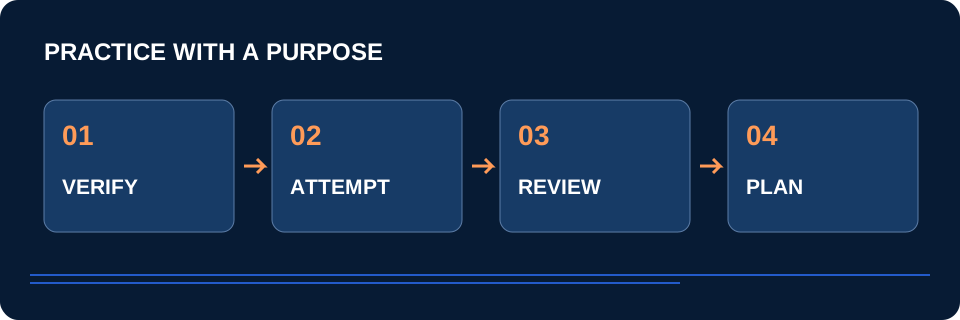
- Open the official paper and verify its identity.
- Read the current notification and the paper instructions.
- Choose learning practice or a diagnostic and record the conditions.
- Attempt without solutions, then check the correctly matched key.
- Review, schedule a repair and test it with fresh material.
Need a model for the repair itself? Use the NDA maths error-log worked example, then place the review into your weekly study routine.
Official references and scope
These notes provide original, general preparation guidance. Use the official authority for examination rules and current notices; the article does not determine individual eligibility.
UPSC: official previous-year question papers UPSC: official answer keys UPSC: active examinations and notificationsCommon questions
Are previous-year papers enough on their own?
They are useful practice resources, but you still need to cover the current syllabus, understand concepts and repair gaps. Use them within a preparation plan rather than as a substitute for learning.
Can I compare a repeated paper score with my first attempt?
Keep the scores labelled separately. Repetition can show retention, but remembered questions and solutions change the conditions. Use unseen material to check transfer.
What if the official answer key is not available?
Check the official UPSC Answer Keys page again when reviewing the paper. Clearly label any interim explanation as unofficial, and keep uncertain items separate from a confirmed score.
Should I start with a full timed paper?
If you are still learning the topics, a smaller untimed set may be more useful. Use a full timed attempt when it answers a clear diagnostic question and you can review it properly.
Connect this guide to your pathway
Explore the preparation focus and questions to ask before choosing your next step.
Ready to discuss your situation? Bring your questions to the enquiry process, or review the parent information page together.